Feedback widget for VuePress
PushFeedback collects user feedback directly from your website. This guide covers installation in a VuePress project.
Prerequisites
Before you begin, you need:
- A PushFeedback account. If you don't have one, sign up for free.
- A project created in your PushFeedback dashboard. If you haven't created one yet, follow the steps in the Quickstart guide.
- A VuePress site and Node.js installed.
Installation
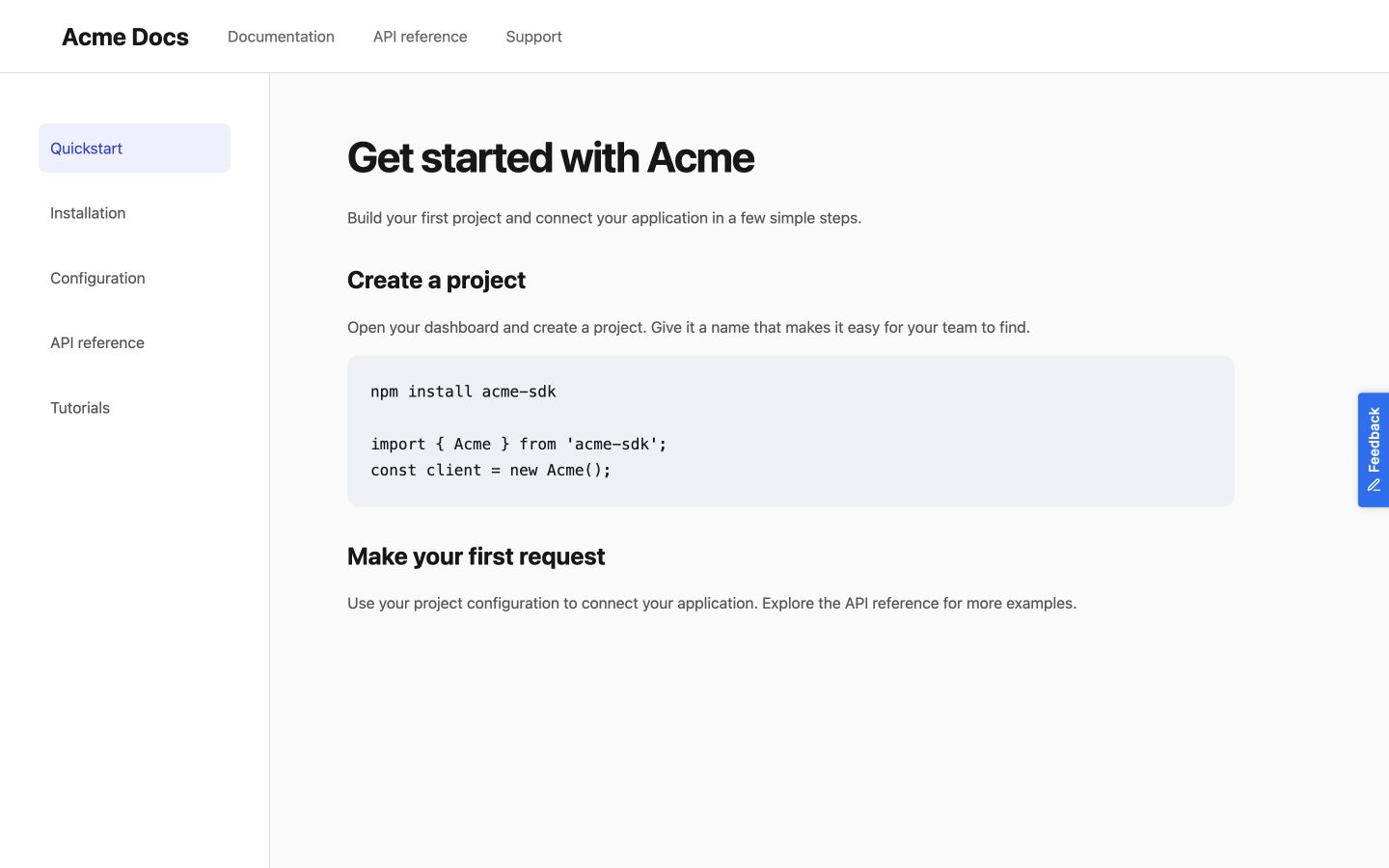
Floating button
-
Install PushFeedback:
npm install pushfeedbackinfoIf you're using yarn as your package manager, run
yarn add pushfeedbackinstead of the npm command above. -
Create a client app enhancement file. In your
.vuepressdirectory, create a file namedenhanceApp.js(orclientAppEnhance.jsfor VuePress 2.x):For VuePress 1.x (
.vuepress/enhanceApp.js):import 'pushfeedback/dist/pushfeedback/pushfeedback.css';export default ({ Vue, options, router, siteData }) => {if (typeof window !== 'undefined') {import('pushfeedback/loader').then(module => {module.defineCustomElements(window);});}};For VuePress 2.x (
.vuepress/client.js):import { defineClientConfig } from '@vuepress/client';import 'pushfeedback/dist/pushfeedback/pushfeedback.css';export default defineClientConfig({async enhance({ app, router, siteData }) {if (typeof window !== 'undefined') {const { defineCustomElements } = await import('pushfeedback/loader');defineCustomElements(window);}},}); -
Create a global component to display the feedback button. Create a file
.vuepress/components/FeedbackButton.vue:<template><feedback-buttonproject="<YOUR_PROJECT_ID>"button-position="bottom-right"modal-position="bottom-right"button-style="dark">Feedback</feedback-button></template><script>export default {name: 'FeedbackButton'};</script>Replace
<YOUR_PROJECT_ID>with your project's ID from the PushFeedback dashboard. -
Add the component to your theme's layout or to individual pages. For a global approach, modify your theme's
Layout.vuefile or create a custom layout:<template><div id="app"><Content /><FeedbackButton /></div></template><script>import FeedbackButton from '../components/FeedbackButton.vue';export default {components: {FeedbackButton}};</script> -
Start your VuePress project by running
npm run devoryarn devin your terminal. Once it compiles successfully, verify that the feedback button appears and functions correctly on your site.
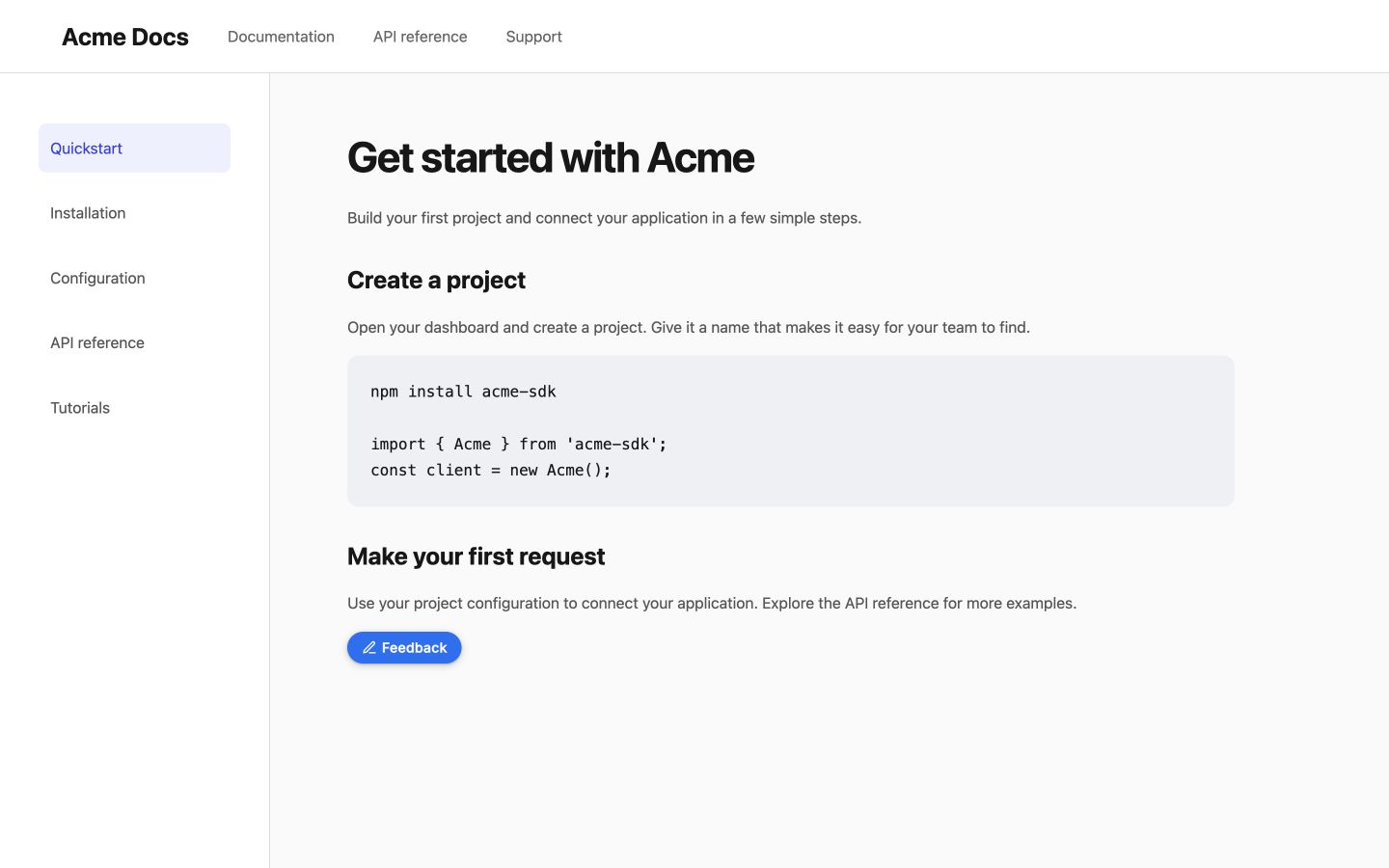
Inline button
Install pushfeedback if it is not already in your project:
npm install pushfeedback
Create .vuepress/components/InlineFeedback.vue with the stylesheet, loader, and widget:
<script setup>
import { onMounted } from 'vue';
import 'pushfeedback/dist/pushfeedback/pushfeedback.css';

onMounted(async () => {
  const { defineCustomElements } = await import('pushfeedback/loader');
  defineCustomElements(window);
});
</script>

<template>
  <feedback-button project="<YOUR_PROJECT_ID>" button-position="default" modal-position="center" button-style="dark">Feedback</feedback-button>
</template>
Render InlineFeedback where you want it in the page content.
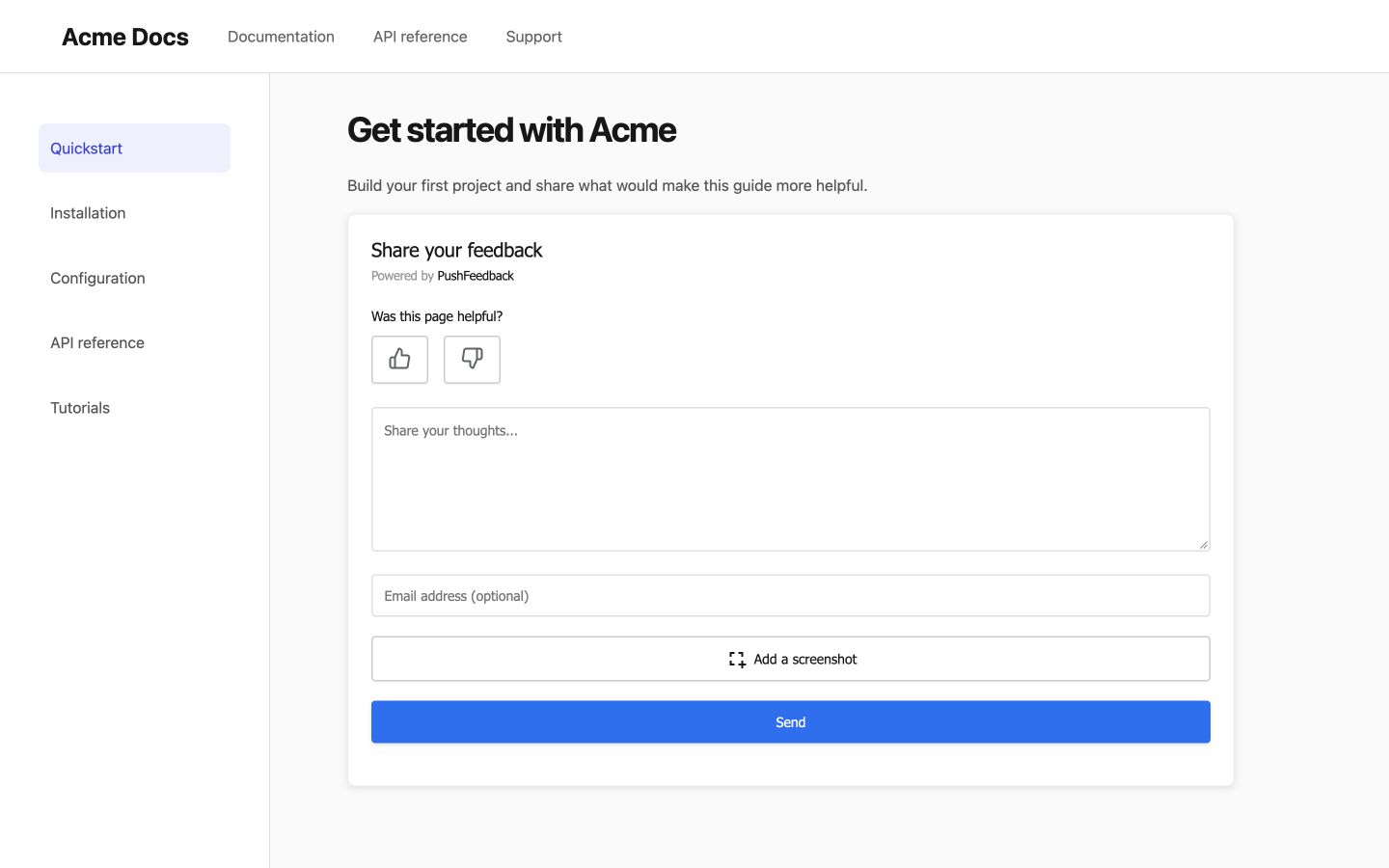
Embedded form
Install pushfeedback if it is not already in your project:
npm install pushfeedback
Create .vuepress/components/EmbeddedFeedback.vue with the stylesheet, loader, and widget:
<script setup>
import { onMounted } from 'vue';
import 'pushfeedback/dist/pushfeedback/pushfeedback.css';

onMounted(async () => {
  const { defineCustomElements } = await import('pushfeedback/loader');
  defineCustomElements(window);
});
</script>

<template>
  <feedback-modal project="<YOUR_PROJECT_ID>" embedded="true"></feedback-modal>
</template>
Render EmbeddedFeedback where you want it in the page content.
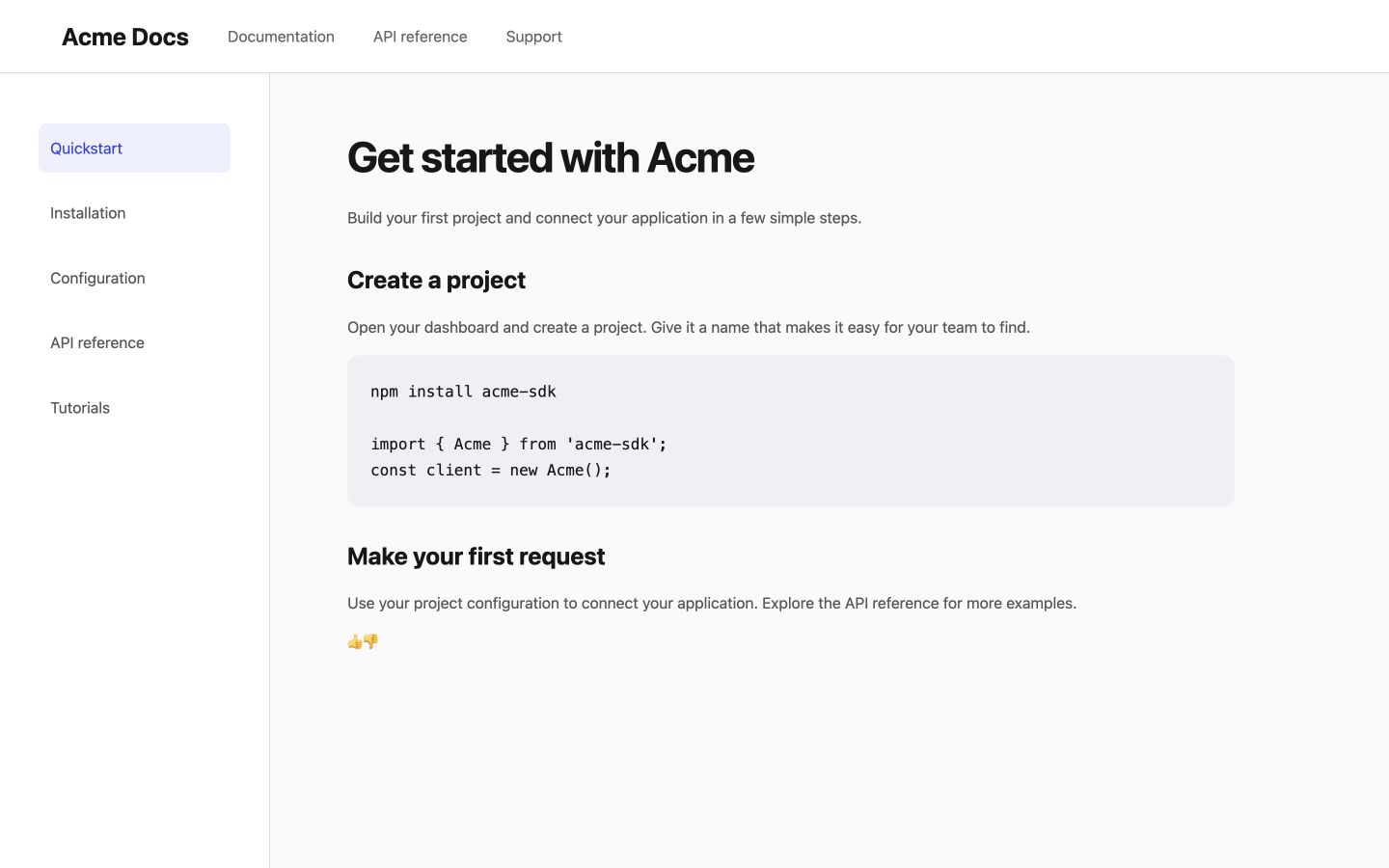
Like and dislike buttons
Install pushfeedback if it is not already in your project:
npm install pushfeedback
Create .vuepress/components/FeedbackThumbs.vue with the stylesheet, loader, and widget:
<script setup>
import { onMounted } from 'vue';
import 'pushfeedback/dist/pushfeedback/pushfeedback.css';

onMounted(async () => {
  const { defineCustomElements } = await import('pushfeedback/loader');
  defineCustomElements(window);
});
</script>

<template>
  <div>
    <p>Was this helpful?</p>
    <div class="pushfeedback-thumbs-row">
    <feedback-button project="<YOUR_PROJECT_ID>" rating="1" button-position="default" modal-position="center" button-style="default" custom-font="true">
      <span class="pushfeedback-thumb-label">Helpful</span>
      <svg xmlns="http://www.w3.org/2000/svg" width="24" height="24" viewBox="0 0 24 24" fill="none" stroke="currentColor" stroke-width="2" stroke-linecap="round" stroke-linejoin="round" aria-hidden="true"><path d="M14 9V5a3 3 0 0 0-3-3l-4 9v11h11.28a2 2 0 0 0 2-1.7l1.38-9a2 2 0 0 0-2-2.3zM7 22H4a2 2 0 0 1-2-2v-7a2 2 0 0 1 2-2h3" /></svg>
    </feedback-button>
    <feedback-button project="<YOUR_PROJECT_ID>" rating="0" button-position="default" modal-position="center" button-style="default" custom-font="true">
      <span class="pushfeedback-thumb-label">Not helpful</span>
      <svg xmlns="http://www.w3.org/2000/svg" width="24" height="24" viewBox="0 0 24 24" fill="none" stroke="currentColor" stroke-width="2" stroke-linecap="round" stroke-linejoin="round" aria-hidden="true"><path d="M10 15v4a3 3 0 0 0 3 3l4-9V2H5.72a2 2 0 0 0-2 1.7l-1.38 9a2 2 0 0 0 2 2.3zm7-13h2.67A2.31 2.31 0 0 1 22 4v7a2.31 2.31 0 0 1-2.33 2H17" /></svg>
    </feedback-button>
    </div>
  </div>
</template>
Render FeedbackThumbs after the article content.
Next steps
Choose what to do next:
- Customization — Adjust the widget's layout, styles, and text.
- Integrations — Forward feedback to Slack, email, Jira, and more.