Feedback widget for NPM projects
Add the PushFeedback widget via NPM.
Prerequisites
- A PushFeedback project. Copy its project ID from Projects > your project > Snippet and replace
<YOUR_PROJECT_ID>in the examples. - Node.js and a bundler that serves
public/as static files, such as Vite.
Examples use pushfeedback 0.1.87. Choose one installation mode.
Installation
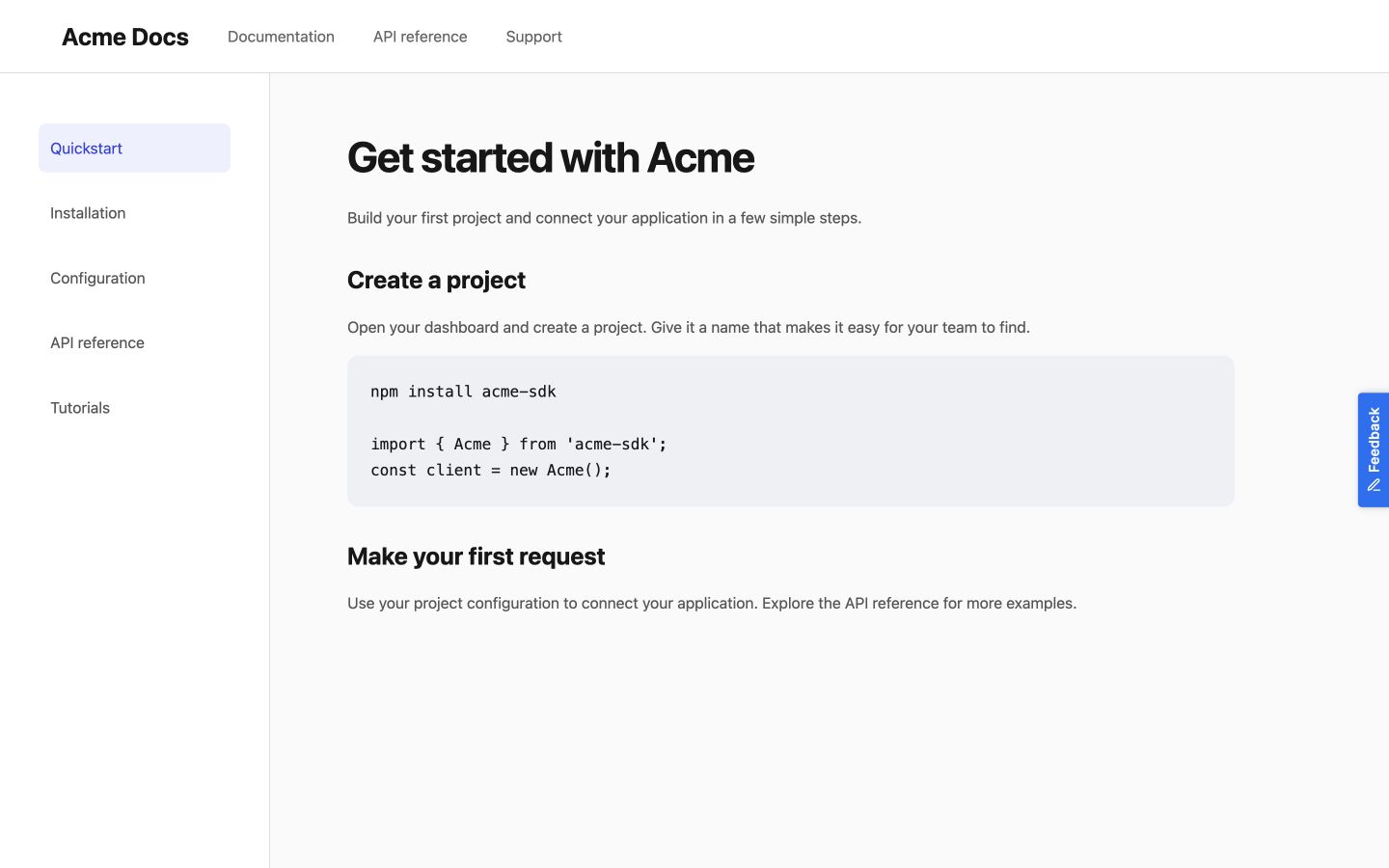
Floating button
-
Install PushFeedback:
npm install [email protected]mkdir -p public/pushfeedbackcp -R node_modules/pushfeedback/dist/pushfeedback/. public/pushfeedback/ -
Add this to your browser entry file:
import 'pushfeedback/dist/pushfeedback/pushfeedback.css';const script = document.createElement('script');script.type = 'module';script.src = '/pushfeedback/pushfeedback.esm.js';document.head.appendChild(script); -
Just before the closing body tag of your website's HTML, add the following snippet:
<feedback-button project="<YOUR_PROJECT_ID>" button-position="bottom-right" modal-position="bottom-right" button-style="dark">Feedback</feedback-button>Replace
<YOUR_PROJECT_ID>with your project's ID from the PushFeedback dashboard. -
Open your site. Click Feedback to check that the form opens.
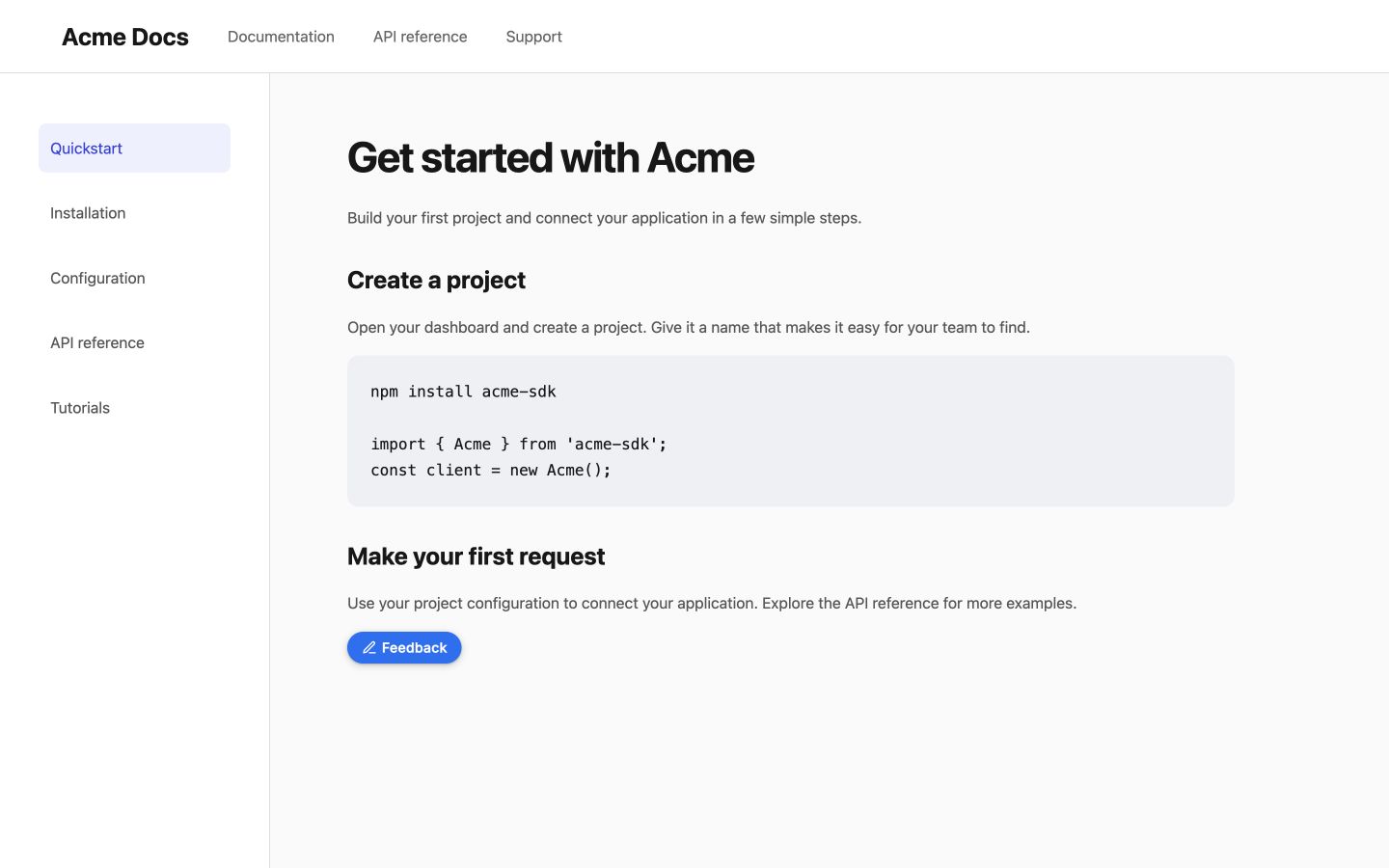
Inline button
-
Install the package if needed:
npm install [email protected]mkdir -p public/pushfeedbackcp -R node_modules/pushfeedback/dist/pushfeedback/. public/pushfeedback/ -
Add this to your browser entry file:
import 'pushfeedback/dist/pushfeedback/pushfeedback.css';const script = document.createElement('script');script.type = 'module';script.src = '/pushfeedback/pushfeedback.esm.js';document.head.appendChild(script); -
Place this markup in your HTML where the content ends:
<feedback-button project="<YOUR_PROJECT_ID>" button-position="default" modal-position="center" button-style="dark">Feedback</feedback-button>
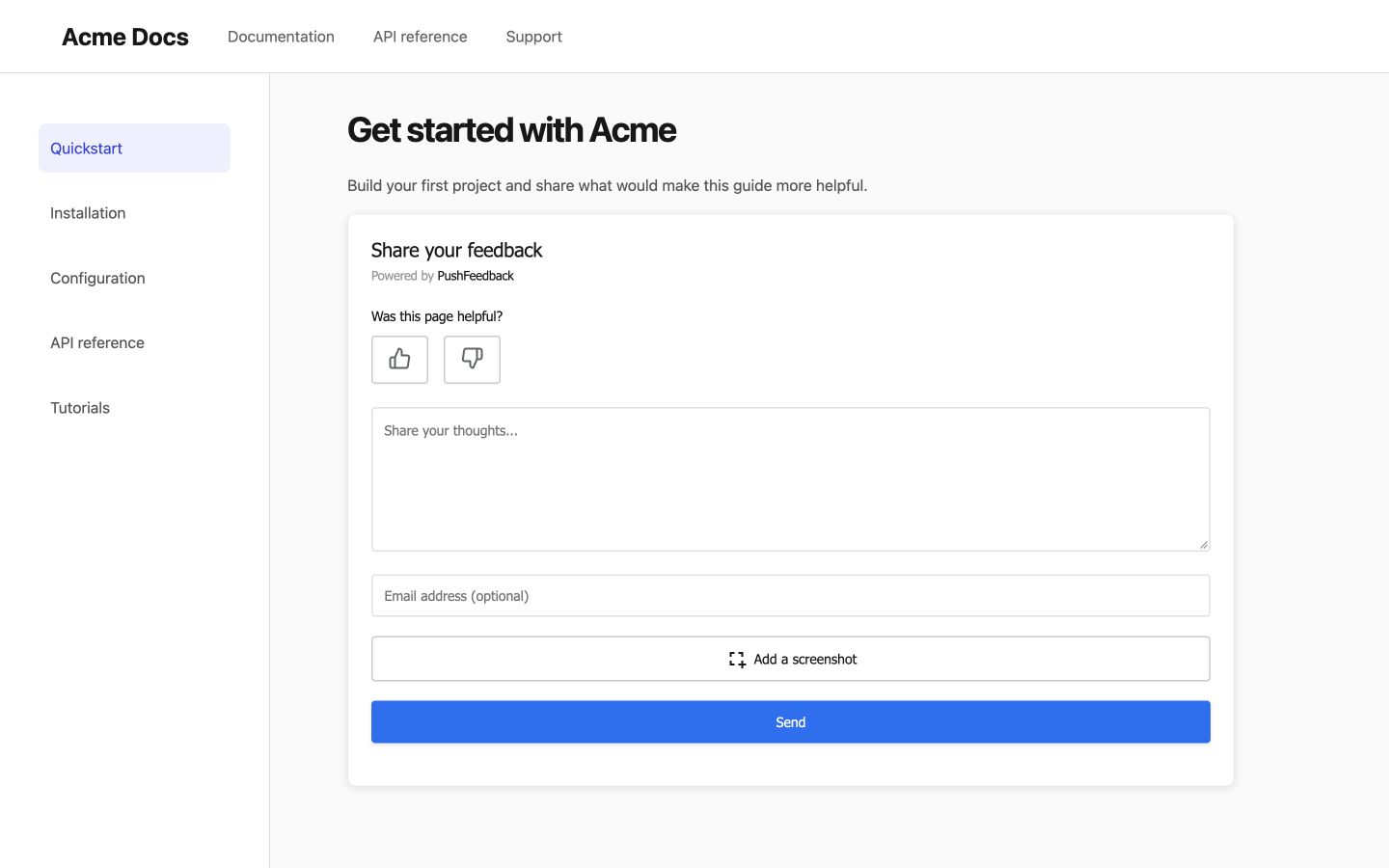
Embedded form
-
Install the package if needed:
npm install [email protected]mkdir -p public/pushfeedbackcp -R node_modules/pushfeedback/dist/pushfeedback/. public/pushfeedback/ -
Add this to your browser entry file:
import 'pushfeedback/dist/pushfeedback/pushfeedback.css';const script = document.createElement('script');script.type = 'module';script.src = '/pushfeedback/pushfeedback.esm.js';document.head.appendChild(script); -
Place this markup in your HTML where the content ends:
<feedback-modal project="<YOUR_PROJECT_ID>" embedded="true"></feedback-modal>
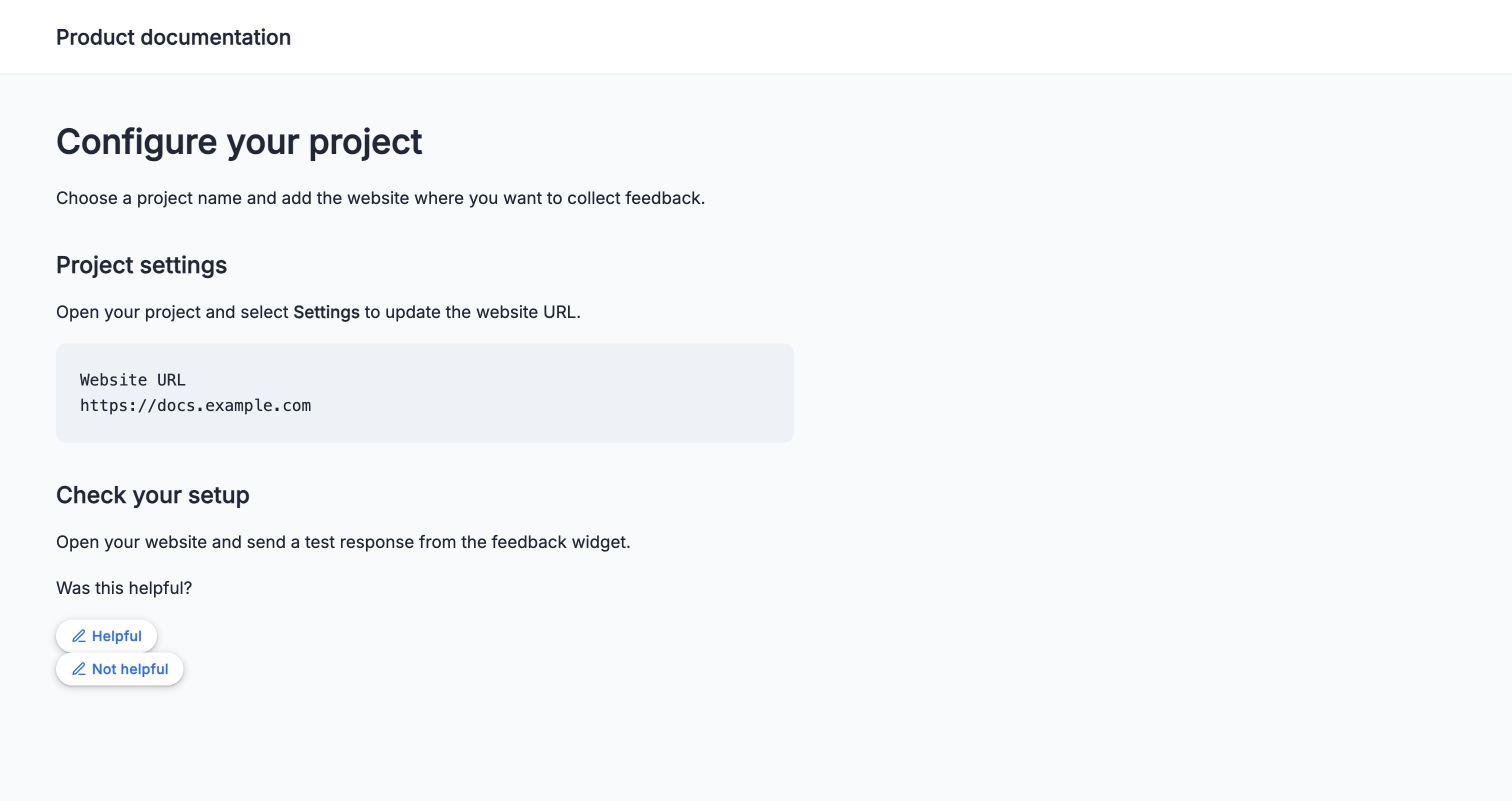
Like and dislike buttons
-
Install the package if needed:
npm install [email protected]mkdir -p public/pushfeedbackcp -R node_modules/pushfeedback/dist/pushfeedback/. public/pushfeedback/ -
Add this to your browser entry file:
import 'pushfeedback/dist/pushfeedback/pushfeedback.css';const script = document.createElement('script');script.type = 'module';script.src = '/pushfeedback/pushfeedback.esm.js';document.head.appendChild(script); -
Place this markup in your HTML where the content ends:
<p>Was this helpful?</p><div class="pushfeedback-thumbs-row"><feedback-button project="<YOUR_PROJECT_ID>" rating="1" button-position="default" modal-position="center" button-style="light" custom-font="true">Helpful</feedback-button><feedback-button project="<YOUR_PROJECT_ID>" rating="0" button-position="default" modal-position="center" button-style="light" custom-font="true">Not helpful</feedback-button></div>
Self-hosted assets
Keep the entire dist/pushfeedback/ directory together. Its entry script loads the other files in that directory at runtime. Copy it again after a package upgrade.
The examples serve public/pushfeedback/ at /pushfeedback/. If your site uses a base path, update the script URL to include it. Other frameworks may use static/ instead of public/. Do not import pushfeedback.esm.js into the bundle unless your build also preserves its runtime files.
To use these assets from a React or Vue example, keep its component and stylesheet imports, and replace the CDN script.src with the URL where your site serves pushfeedback.esm.js.
Next steps
- Customization: Adjust the widget's layout, styles, and text.
- Integrations: Forward feedback to Slack, email, Jira, and more.